Articles | Volume 20, issue 17
https://doi.org/10.5194/bg-20-3613-2023
© Author(s) 2023. This work is distributed under
the Creative Commons Attribution 4.0 License.
https://doi.org/10.5194/bg-20-3613-2023
© Author(s) 2023. This work is distributed under
the Creative Commons Attribution 4.0 License.
Bacterioplankton dark CO2 fixation in oligotrophic waters
Afrah Alothman
CORRESPONDING AUTHOR
Red Sea Research Centre, Biological and Environmental Science and
Engineering Division, King Abdullah University of Science and Technology
(KAUST), Thuwal, 23955, Saudi Arabia
Daffne López-Sandoval
Red Sea Research Centre, Biological and Environmental Science and
Engineering Division, King Abdullah University of Science and Technology
(KAUST), Thuwal, 23955, Saudi Arabia
Coastal and Marine Resources Core Lab (CMR), King Abdullah
University of Science and Technology (KAUST), Thuwal, 23955, Saudi Arabia
Carlos M. Duarte
Red Sea Research Centre, Biological and Environmental Science and
Engineering Division, King Abdullah University of Science and Technology
(KAUST), Thuwal, 23955, Saudi Arabia
Susana Agustí
Red Sea Research Centre, Biological and Environmental Science and
Engineering Division, King Abdullah University of Science and Technology
(KAUST), Thuwal, 23955, Saudi Arabia
Related authors
No articles found.
Fabio Marchese, Marta Andrea Ezeta Watts, Megan Klein Breteler Nolan, Natalie Dunn, Katherine von Krusenstiern, Craig Foy, Mattie Rodrigue, Mohammed Qurban, Carlos Manuel Duarte, Vincent Pieribone, and Francesca Benzoni
Earth Syst. Sci. Data Discuss., https://doi.org/10.5194/essd-2026-317, https://doi.org/10.5194/essd-2026-317, 2026
Preprint under review for ESSD
Short summary
Short summary
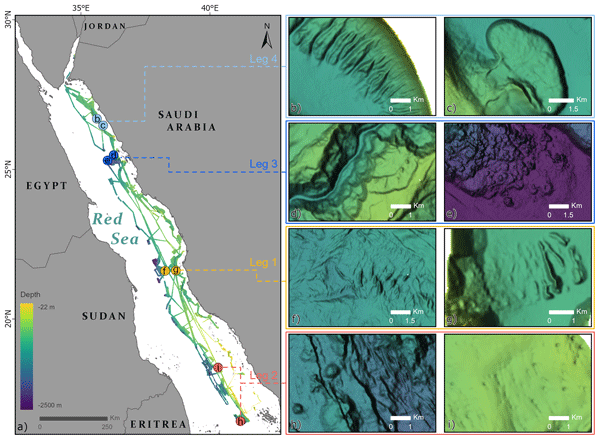
The Saudi Arabian Red Sea has historically lacked detailed seafloor mapping, with existing data either limited to the central axial rift or too coarse for ecological and oceanographic research. In 2022, a five-month expedition surveyed over 49,000 square kilometres of seabed using multibeam echosounder systems at 5 and 40 metres resolution. This dataset will support habitat mapping, deep-sea research, and future scientific investigations in the Red Sea.
Jessica Breavington, Alexandra Steckbauer, Chuancheng Fu, Mongi Ennasri, and Carlos M. Duarte
Biogeosciences, 22, 117–134, https://doi.org/10.5194/bg-22-117-2025, https://doi.org/10.5194/bg-22-117-2025, 2025
Short summary
Short summary
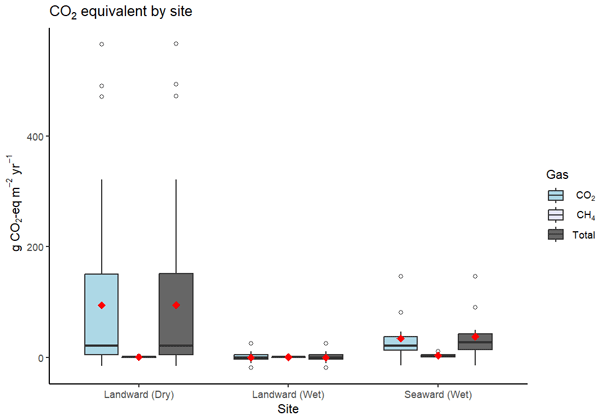
Mangrove carbon storage in the Red Sea is lower than average due to challenging growth conditions. We collected mangrove soil cores over multiple seasons to measure greenhouse gas (GHG) flux of carbon dioxide and methane. GHG emissions are a small offset to mangrove carbon storage overall but punctuated by periods of high emission. This variation is linked to environmental and soil properties, which were also measured. The findings aid understanding of GHG dynamics in arid mangrove ecosystems.
Christian Lønborg, Cátia Carreira, Gwenaël Abril, Susana Agustí, Valentina Amaral, Agneta Andersson, Javier Arístegui, Punyasloke Bhadury, Mariana B. Bif, Alberto V. Borges, Steven Bouillon, Maria Ll. Calleja, Luiz C. Cotovicz Jr., Stefano Cozzi, Maryló Doval, Carlos M. Duarte, Bradley Eyre, Cédric G. Fichot, E. Elena García-Martín, Alexandra Garzon-Garcia, Michele Giani, Rafael Gonçalves-Araujo, Renee Gruber, Dennis A. Hansell, Fuminori Hashihama, Ding He, Johnna M. Holding, William R. Hunter, J. Severino P. Ibánhez, Valeria Ibello, Shan Jiang, Guebuem Kim, Katja Klun, Piotr Kowalczuk, Atsushi Kubo, Choon-Weng Lee, Cláudia B. Lopes, Federica Maggioni, Paolo Magni, Celia Marrase, Patrick Martin, S. Leigh McCallister, Roisin McCallum, Patricia M. Medeiros, Xosé Anxelu G. Morán, Frank E. Muller-Karger, Allison Myers-Pigg, Marit Norli, Joanne M. Oakes, Helena Osterholz, Hyekyung Park, Maria Lund Paulsen, Judith A. Rosentreter, Jeff D. Ross, Digna Rueda-Roa, Chiara Santinelli, Yuan Shen, Eva Teira, Tinkara Tinta, Guenther Uher, Masahide Wakita, Nicholas Ward, Kenta Watanabe, Yu Xin, Youhei Yamashita, Liyang Yang, Jacob Yeo, Huamao Yuan, Qiang Zheng, and Xosé Antón Álvarez-Salgado
Earth Syst. Sci. Data, 16, 1107–1119, https://doi.org/10.5194/essd-16-1107-2024, https://doi.org/10.5194/essd-16-1107-2024, 2024
Short summary
Short summary
In this paper, we present the first edition of a global database compiling previously published and unpublished measurements of dissolved organic matter (DOM) collected in coastal waters (CoastDOM v1). Overall, the CoastDOM v1 dataset will be useful to identify global spatial and temporal patterns and to facilitate reuse in studies aimed at better characterizing local biogeochemical processes and identifying a baseline for modelling future changes in coastal waters.
Cited articles
Alonso-Sáez, L., Galand, P. E., Casamayor, E. O., Pedros-Alio, C., and
Bertilsson, S.: High bicarbonate assimilation in the dark by Arctic
bacteria, ISME J., 4, 1581–1590, 2010.
Azam, F., Fenchel, T., J. G., Gray, J. S., Meyer-Reil, L. A., and
Thingstad, F.: The ecological role of water-column microbes in the
sea, Mar. Ecol.-Prog. Ser., 10, 257–263, 1983.
Baltar, F. and Herndl, G. J.: Ideas and perspectives: Is dark carbon fixation relevant for oceanic primary production estimates?, Biogeosciences, 16, 3793–3799, https://doi.org/10.5194/bg-16-3793-2019, 2019.
Baltar, F., Arístegui, J., Sintes, E., Gasol, J. M., Reinthaler, T.,
and Herndl, G. J.: Significance of non-sinking particulate organic carbon
and dark CO2 fixation to heterotrophic carbon demand in the mesopelagic
northeast Atlantic, Geophys. Res. Lett., 37, L09602, https://doi.org/10.1029/2010GL043105, 2010.
Baltar, F., Lundin, D., Palovaara, J., Lekunberri, I., Reinthaler, T.,
Herndl, G. J., and Pinhassi, J.: Prokaryotic responses to ammonium and
organic carbon reveal alternative CO2 fixation pathways and importance of
alkaline phosphatase in the mesopelagic North Atlantic, Front.
Microbiol., 7, 1670, https://doi.org/10.3389/fmicb.2016.01670, 2016.
Berden, G., Peeters, R., and Meijer, G.: Cavity ring-down spectroscopy:
Experimental schemes and applications, Int. Rev. Phys.
Chem., 19, 565–607, 2000.
Braun, A., Spona-Friedl, M., Avramov, M., Elsner, M., Baltar, F., Reinthaler, T., Herndl, G. J., and Griebler, C.: Reviews and syntheses: Heterotrophic fixation of inorganic carbon – significant but invisible flux in environmental carbon cycling, Biogeosciences, 18, 3689–3700, https://doi.org/10.5194/bg-18-3689-2021, 2021.
Boschker, H. T. S. and Middelburg, J. J.: Stable isotopes and biomarkers
in microbial ecology, FEMS Microbiol. Ecol., 40, 85–95, 2002.
Chaidez, V., Dreano, D., Agusti, S., Duarte, C. M., and Hoteit, I.: Decadal
trends in Red Sea maximum surface temperature, Sci. Rep., 7,
1–8, 2017.
Dickson, A. G., Sabine, C. L., and Christian, J. R.: Guide to best
practices for ocean CO2 measurements, North Pacific Marine Science
Organization, PICES Special Publication 3; IOCCP Report 8, 191, https://doi.org/10.25607/OBP-1342, 2007.
Dijkhuizen, L. and Harder, W.: Current views on the regulation of
autotrophic carbon dioxide fixation via the Calvin cycle in
bacteria, Antonie van Leeuwenhoek, 50, 473–487, 1984.
Ducklow, H. and Kirchman, D.: Bacterial production and biomass in the
oceans, Microbial Ecology of the Oceans, 1, 85–120, 2000.
Edwards, F. J.: Climate and oceanography, Red sea, 1, 45–68, 1987.
Erb, T. J.: Carboxylases in natural and synthetic microbial
pathways, Appl. Environ. Microb., 77, 8466–8477, 2011.
Field, C. B., Behrenfeld, M. J., Randerson, J. T., and Falkowski, P.: Primary production of the biosphere: integrating terrestrial and oceanic components, Science, 281, 237–240, 1998.
Gasol, J. M. and Morán, X. A. G.: Flow cytometric determination of
microbial abundances and its use to obtain indices of community structure
and relative activity, in: Hydrocarbon and Lipid Microbiology
Protocols, edited by: McGenity, T. J., Timmis, K. N., and Nogales, B., Springer, Berlin, Heidelberg, 159–187, 2016.
González, J. M., Fernández-Gómez, B., Fernàndez-Guerra, A.,
Gómez-Consarnau, L., Sánchez, O., Coll-Lladó, M., Del Campo, J.,
Escudero, L., Rodríguez-Martínez, R., Alonso-Sáez, L., and
Latasa, M.: Genome analysis of the proteorhodopsin-containing marine
bacterium Polaribacter sp. MED152 (Flavobacteria), P.
Natl. Acad. Sci. USA, 105, 8724–8729, 2008.
Grasshoff, K.: Zur Chemie des Roten Meeres und des Inneren Golfs von Aden : nach beobachtungen von F. S. “Meteor” während der Indischen Ozean Expedition 1964/65, Meteor Forschungsergebnisse: Reihe A, Allgemeines, Physik und Chemie des Meeres, 6, 1–76, 1969.
Hansen, H. P. and Koroleff, F.: Determination of Nutrients, Methods of
Seawater Analysis, edited by: Grasshoff, K., Kremling, K., and Ehrhardt, M., 159–228, https://doi.org/10.1002/9783527613984.ch10, 1999.
Ionescu, D., Penno, S., Haimovich, M., Rihtman, B., Goodwin, A., Schwartz,
D., Hazanov, L., Chernihovsky, M., Post, A. F., and Oren, A.: Archaea in the
Gulf of Aqaba, FEMS Nicrobiol. Ecol., 69, 425–438, 2009.
Kirchman, D. L.: Uptake and regeneration of inorganic nutrients by marine
heterotrophic bacteria, Microbial Ecology of the Oceans, 28, 255–271, 2000.
Koshikawa, H., Harada, S., Watanabe, M., Kogure, K., Ioriya, T., Kohata, K., Kimura, T., Sato, K., and Akehata, T.: Influence of plankton community structure on the
contribution of bacterial production to metazooplankton in a coastal
mesocosm, Mar. Ecol.-Prog. Ser., 186, 31–42, https://doi.org/10.3354/meps186031, 1999.
Li, W. K. W. and Dickie, P. M.: Light and dark 14C uptake in dimly-lit
oligotrophic waters: relation to bacterial activity, J Plankton
Res., 13, 29–44, 1991.
Li, W. K. W., Irwin, B. D., and Dickie, P. M.: Dark fixation of 14C:
variations related to biomass and productivity of phytoplankton and
bacteria, Limnol. Oceanogr., 38, 483–494, 1993.
Llirós, M., Alonso-Sáez, L., Gich, F., Plasencia, A., Auguet, O.,
Casamayor, E. O., and Borrego, C. M.: Active bacteria and archaea cells
fixing bicarbonate in the dark along the water column of a stratified
eutrophic lagoon, FEMS Microbiol. Ecol., 77, 370–384, 2011.
López-Sandoval, D. C., Delgado-Huertas, A., and Agustí, S.: The 13C method as a robust alternative to 14C-based measurements of primary productivity in the Mediterranean Sea, J. Plankton Res., 40, 544–554, 2018.
López-Sandoval, D. C., Delgado-Huertas, A., Carrillo-de-Albornoz, P.,
Duarte, C. M., and Agustí, S.: Use of cavity ring-down spectrometry to
quantify 13C-primary productivity in oligotrophic waters, Limnol.
Oceanogr.-Meth., 17, 137–144, 2019.
López-Sandoval, D. C., Duarte, C. M., and Agustí, S.: Nutrient and
temperature constraints on primary production and net phytoplankton growth
in a tropical ecosystem, Limnol. Oceanogr., 66, 2923–2935, 2021.
Markager, S.: Dark uptake of inorganic 14C in oligotrophic oceanic
waters, J. Plankton Res., 20, 1813–1836, 1998.
Middelburg, J. J., Barranguet, C., Boschker, H. T., Herman, P. M., Moens,
T., and Heip, C. H.: The fate of intertidal microphytobenthos carbon: An in
situ 13C-labeling study, Limnol. Oceanogr., 45, 1224–1234, 2000
Nielsen, E. S.: Dark fixation of CO2 and measurements of organic
productivity. With remarks on chemo-synthesis, Physiol. Plantarum, 13,
348–357, 1960.
Palovaara, J., Akram, N., Baltar, F., Bunse, C., Forsberg, J., Pedrós-Alió, C., González, J. M., and Pinhassi, J.: Stimulation of growth by
proteorhodopsin phototrophy involves regulation of central metabolic
pathways in marine planktonic bacteria, P. Natl. Acad.
Sci. USA, 111, E3650–E3658, 2014.
Prabowo, D. A. and Agusti, S.: Free-living dinoflagellates of the central Red
Sea, Saudi Arabia: Variability, new records and potentially harmful
species, Mar. Pollut. Bull., 141, 629–648, 2019.
Prakash, A., Sheldon, R. W., and Sutcliffe Jr., W. H.: Geographic variation
of oceanic 14C dark uptake, Limnol. Oceanogr., 36, 30–39, 1991.
Reinthaler, T., van Aken, H. M., and Herndl, G. J.: Major contribution of
autotrophy to microbial carbon cycling in the deep North Atlantic's
interior, Deep-Sea Res. Pt. II, 57, 1572–1580, 2010.
Roslev, P., Larsen, M. B., Jørgensen, D., and Hesselsoe, M.: Use of
heterotrophic CO2 assimilation as a measure of metabolic activity in
planktonic and sessile bacteria, J. Microbiol. Meth., 59,
381–393, 2004.
Shaltout, M.: Recent Sea surface temperature trends and future scenarios for
the Red Sea, Oceanologia, 61, 484–504, 2019.
Signori, C. N., Valentin, J. L., Pollery, R. C., and Enrich-Prast, A.:
Temporal variability of dark carbon fixation and bacterial production and
their relation with environmental factors in a tropical estuarine
system, Estuar. Coast., 41, 1089–1101, 2018.
Steemann-Nielsen, E.: On the determination of the activity for measuring
primary production, J. Cons. Int. Explor. Mer., 18, 117–140, 1952.
Wafar, M., Qurban, M. A., Ashraf, M., Manikandan, K. P., Flandez, A. V.,
and Balala, A. C.: Patterns of distribution of inorganic nutrients in Red
Sea and their implications to primary production, J. Marine
Syst., 156, 86–98, 2016.
Wood, H. G. and Werkman, C. H.: The utilisation of CO2 in the
dissimilation of glycerol by the propionic acid bacteria, Biochem.
J., 30, 48–53, https://doi.org/10.1042/bj0300048, 1936.
Yakimov, M. M., La Cono, V., Smedile, F., Crisafi, F., Arcadi, E., Leonardi,
M., Decembrini, F., Catalfamo, M., Bargiela, R., Ferrer, M., and Golyshin,
P. N.: Heterotrophic bicarbonate assimilation is the main process of de novo
organic carbon synthesis in hadal zone of the Hellenic Trench, the deepest
part of Mediterranean Sea, Env. Microbiol. Rep., 6,
709–722, 2014.
Yao, F. and Hoteit, I.: Rapid red sea deep water renewals caused by
volcanic eruptions and the North Atlantic oscillation, Sci.
Adv., 4, eaar5637, https://doi.org/10.1126/sciadv.aar5637, 2018.
Zhou, W., Liao, J., Guo, Y., Yuan, X., Huang, H., Yuan, T., and Liu, S.:
High dark carbon fixation in the tropical South China Sea, Cont. Shelf
Res., 146, 82–88, 2017.
Short summary
This study investigates bacterial dissolved inorganic carbon (DIC) fixation in the Red Sea, an oligotrophic ecosystem, using stable-isotope labeling and spectroscopy. The research reveals that bacterial DIC fixation significantly contributes to total DIC fixation, in the surface and deep water. The study demonstrates that as primary production decreases, the role of bacterial DIC fixation increases, emphasizing its importance with photosynthesis in estimating oceanic carbon dioxide production.
This study investigates bacterial dissolved inorganic carbon (DIC) fixation in the Red Sea, an...
Altmetrics
Final-revised paper
Preprint