Articles | Volume 19, issue 4
https://doi.org/10.5194/bg-19-1067-2022
© Author(s) 2022. This work is distributed under
the Creative Commons Attribution 4.0 License.
https://doi.org/10.5194/bg-19-1067-2022
© Author(s) 2022. This work is distributed under
the Creative Commons Attribution 4.0 License.
Assessing the spatial and temporal variability of greenhouse gas emissions from different configurations of on-site wastewater treatment system using discrete and continuous gas flux measurement
Jan Knappe
Department of Civil, Structural and Environmental Engineering, Trinity College Dublin, The University of Dublin, Dublin, Ireland
Celia Somlai
Department of Civil, Structural and Environmental Engineering, Trinity College Dublin, The University of Dublin, Dublin, Ireland
Related authors
No articles found.
Yining Zang, Pauline C. Treble, Kei Yoshimura, Jayson Gabriel Pinza, Fengbo Zhang, Kübra Özdemir Çallı, Xiaojun Mei, Admin Husic, Alena Gessert, Andrej Stroj, Bartolomé Andreo, Bernard Ladouche, Christine Stumpp, Diana Mance, Eleni Zagana, Fen Huang, Giuseppe Sappa, Harald Kunstmann, Heike Brielmann, Hong Zhou, Huaying Wu, Jakob Garvelmann, James Berglund, Jean-Baptiste Charlier, Jens Lange, Juan Antonio Barberá Fornell, Junbing Pu, Konstantina Katsanou, Kun Ren, Laura Toran, Laurence Gill, Maria Filippini, Martin Kralik, Matías Mudarra Martínez, Min Zhao, Mingming Luo, Nico Goldscheider, Nikolaos Lambrakis, Pantaleone De Vita, Qiong Xiao, Shi Yu, Silvia Iacurto, Silvio Coda, Ted McCormack, Vincenzo Allocca, W. George Darling, Walter D’Alessandro, Xulei Guo, Yundi Hu, Zhijun Wang, Eva Kaminsky, Jiří Faimon, Marek Lang, Pavel Pracný, and Andreas Hartmann
Earth Syst. Sci. Data Discuss., https://doi.org/10.5194/essd-2025-812, https://doi.org/10.5194/essd-2025-812, 2026
Preprint under review for ESSD
Short summary
Short summary
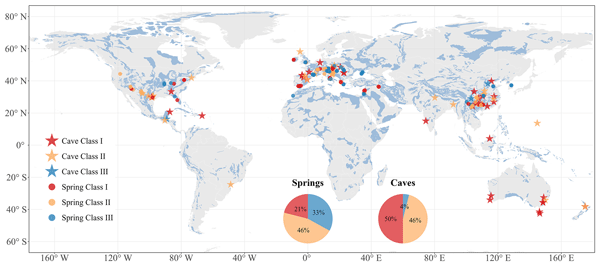
We developed the first global database of water from karst springs and cave drips that records different forms of oxygen and hydrogen, which naturally trace how rainwater moves through rocks. By gathering and checking thousands of measurements from around the globe and linking them with flow and rainfall data, the database provides a comprehensive view of water movement, allows scientists to compare regions, understand groundwater processes, and support sustainable water management worldwide.
Mariana P. Silva, Mark G. Healy, and Laurence Gill
Biogeosciences, 21, 3143–3163, https://doi.org/10.5194/bg-21-3143-2024, https://doi.org/10.5194/bg-21-3143-2024, 2024
Short summary
Short summary
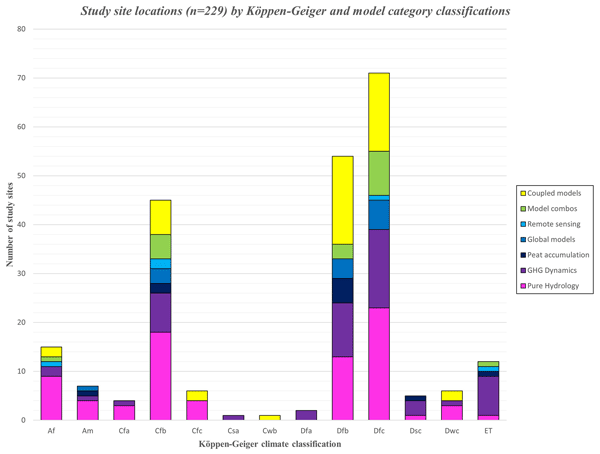
Peatland restoration combats climate change and protects ecosystem health in many northern regions. This review gathers data about models used on northern peatlands to further envision their application in the specific scenario of restoration. A total of 211 papers were included in the review: location trends for peatland modelling were catalogued, and key themes in model outputs were highlighted. Valuable context is provided for future efforts in modelling the peatland restoration process.
Saheba Bhatnagar, Mahesh Kumar Sha, Laurence Gill, Bavo Langerock, and Bidisha Ghosh
Biogeosciences Discuss., https://doi.org/10.5194/bg-2022-88, https://doi.org/10.5194/bg-2022-88, 2022
Revised manuscript not accepted
Short summary
Short summary
Different land types emit a different quantity of methane, with wetlands being one of the largest sources of methane emissions, contributing to climate change. This study finds variations in land types using the methane total column data from Sentinel 5-precursor satellite with a machine learning algorithm. The variations in land types were identified with high confidence, demonstrating that the methane emissions from the wetland and other land types substantially affect the total column.
Patrick Morrissey, Paul Nolan, Ted McCormack, Paul Johnston, Owen Naughton, Saheba Bhatnagar, and Laurence Gill
Hydrol. Earth Syst. Sci., 25, 1923–1941, https://doi.org/10.5194/hess-25-1923-2021, https://doi.org/10.5194/hess-25-1923-2021, 2021
Short summary
Short summary
Lowland karst aquifers provide important wetland habitat resulting from seasonal flooding on the land surface. This flooding is controlled by surcharging of the karst system, which is very sensitive to changes in rainfall. This study investigates the predicted impacts of climate change on a lowland karst catchment in Ireland and highlights the relative vulnerability to future changing climate conditions of karst systems and any associated wetland habitats.
Cited articles
Allen, R. G., Pereira, L. S., Raes, D., and Smith, M.: Crop evapotranspiration – guidelines for computing crop water requirements,
Food and Agriculture Organization, Rome, Italy, 1998.
Ambus, P. and Christensen, S.:
Spatial and seasonal nitrous oxide and methane fluxes in Danish forest-, grassland-, and agroecosystems,
J. Environ Qual.,
24, 993–1001, https://doi.org/10.2134/jeq1995.00472425002400050031x, 1995.
Anderson, F. L., Cooper, J. A., and Amador, J. A.:
Laboratory-scale evaluation of the effects of water-filled pore space on emissions of CO2, CH4, N2O, and N2 from soil-based wastewater treatment,
Water Air Soil Poll.,
230, 245, https://doi.org/10.1007/s11270-019-4294-7, 2019.
Banjanovic, E. S. and Osborne, J. W.:
Confidence intervals for effect sizes: applying bootstrap resampling,
Prac. Assess. Res. Eval.,
21, 5, https://doi.org/10.7275/dz3r-8n08, 2016.
Bastviken, D., Tranvik, L. J., Downing, J. A., Crill, P. M., and Enrich-Prast, A.:
Freshwater methane emissions offset the continental carbon sink,
Science,
331, 50, https://doi.org/10.1126/science.1196808, 2011.
Beach, D. N. H., McCray, J. E., Lowe, K. S., and Siegrist, R. L.:
Temporal changes in hydraulic conductivity of sand porous media biofilters during wastewater infiltration due to biomat formation,
J. Hydrol.,
311, 230–243, https://doi.org/10.1016/j.jhydrol.2005.01.024, 2005.
Beal, C. D., Gardner, E. A., and Menzies, N. W.:
Process, performance, and pollution potential: A review of septic tank – soil absorption systems,
Aust. J. Soil Res.,
43, 781, https://doi.org/10.1071/SR05018, 2005.
Blackett, I., Hawkins, P. M., and Heymans, C.:
The Missing Link in Sanitation Service Delivery: A Review of Fecal Sludge Management in 12 Cities,
World Bank Global Water Practice – Water and Sanitation Program (WSP), https://www.wsp.org/sites/wsp/files/publications/WSP-Fecal-Sludge-12-City-Review-Research-Brief.pdf (last access: 9 February 2022)
2014.
Bogner, J., Pipatti, R., Hashimoto, S., Diaz, C., Mareckova, K., Diaz, L., Kjeldsen, P., Monni, S., Faaij, A., Gao, Q., Zhang, T., Ahmed, M. A., Sutamuhardja, R. T. M., and Gregory, R.:
Mitigation of global greenhouse gas emissions from waste: conclusions and strategies from the Intergovernmental Panel on Climate Change (IPCC) Fourth Assessment Report. Working Group III (Mitigation),
Waste Manage. Res.,
26, 11–32, https://doi.org/10.1177/0734242X07088433, 2008.
Bouma, J.:
Unsaturated flow during soil treatment of septic tank effluent,
J. Env. Eng. Div.-ASCE,
101, 967–983, https://doi.org/10.1061/JEEGAV.0000438, 1975.
Braun, M., Bai, Y., McConkey, B., Farrell, R., Romo, J., and Pennock, D.:
Greenhouse gas flux in a temperate grassland as affected by landform and disturbance,
Landscape Ecol.,
28, 709–723, https://doi.org/10.1007/s10980-013-9878-9, 2013.
Burchart-Korol, D. and Zawartka, P.:
Environmental life cycle assessment of septic tanks in urban wastewater system – a case study for Poland,
Arch. Environ. Prot.,
45, 68–77, https://doi.org/10.24425/aep.2019.130243, 2019.
Cakir, F. Y. and Stenstrom, M. K.:
Greenhouse gas production: a comparison between aerobic and anaerobic wastewater treatment technology,
Water Res.,
39, 4197–4203, https://doi.org/10.1016/j.watres.2005.07.042, 2005.
Carpenter J. and Bithell J.:
Bootstrap confidence intervals: when, which, what? A practical guide for medical statisticians,
Stat. Med.,
19, 1141–1164, https://doi.org/10.1002/(SICI)1097-0258(20000515)19:9<1141:AID-SIM479>3.0.CO;2-F, 2000.
Cooper, J. A., Loomis, G. W., and Amador, J. A.:
Hell and high water: diminished septic system performance in coastal regions due to climate change,
Plos One,
11, e0162104, https://doi.org/10.1371/journal.pone.0162104, 2016.
Czepiel, P. M., Crill, P. M., and Harriss, R. C.:
Methane emissions from municipal wastewater treatment processes,
Environ. Sci. Technol.,
27, 2472–2477, https://doi.org/10.1021/es00048a025, 1993.
Diaz-Valbuena, L. R., Leverenz, H. L., Cappa, C. D., Tchobanoglous, G., Horwath, W. R., and Darby, J. L.:
Methane, carbon dioxide, and nitrous oxide emissions from septic tank systems,
Environ. Sci. Technol.,
45, 2741–2747, https://doi.org/10.1021/es1036095, 2011.
Dubber D., Knappe J., and Gill L. W.:
Characterisation of organic matter and its transformation processes in on-site wastewater effluent percolating through soil using fluorescence spectroscopic methods and parallel factor analysis (PARAFAC),
Water,
13, 2627, https://doi.org/10.3390/w13192627, 2021.
Dunfield, P. F., Topp, E., Archambault, C., and Knowles, R.:
Effect of nitrogen fertilizers and moisture content on CH4 and N2O fluxes in a humisol: measurements in the field and intact soil cores,
Biogeochemistry,
29, 199–222, https://doi.org/10.1007/BF02186048, 1995.
Ecoinvent:
Ecoinvent v3.6, https://www.ecoinvent.org/, last access: 3 December 2021.
EEA:
Eurostat database, European Environment Agency, http://www.eea.europa.eu/publications/environmental-pressures-from-european-consumption (last access: 9 January 2021), 2013.
EPA:
Ireland's national inventory submissions 2018,
Environmental Protection Agency, Johnstown Castle, Co. Wexford, Ireland, 2018.
Fernández-Baca, C. P., Truhlar, A. M., Omar, A.-E. H., Rahm, B. G., Walter, M. T., and Richardson, R. E.:
Methane and nitrous oxide cycling microbial communities in soils above septic leach fields: Abundances with depth and correlations with net surface emissions,
Sci. Total Environ.,
640–641, 429–441, https://doi.org/10.1016/j.scitotenv.2018.05.303, 2018.
Fernández-Baca, C. P., Truhlar, A. M., Omar, A.-E, Reid, M. C., and Richardson, R. E.:
Temporal lags in post-rain greenhouse gas cycling and fluxes from septic leach field soils and associated greenhouse gas cycling microbial populations,
J. Sust. Water Built Env.,
6, 04020004, https://doi.org/10.1061/JSWBAY.0000910, 2020.
Gill, L. W., O'Luanaigh, N., Johnston, P. M., Misstear, B. D. R., and O'Suilleabhain, C.:
Nutrient loading on subsoils from on-site wastewater effluent, comparing septic tank and secondary treatment systems,
Water Res.,
43, 2739–2749, https://doi.org/10.1016/j.watres.2009.03.024, 2009.
Gill, L. W., Mac Mahon, J., Knappe, J., Gharbia, S., and Pilla, F.:
Desludging rates and mechanisms for domestic wastewater treatment system sludges in Ireland, STRIVE Report Series No. 253,
Environmental Protection Agency, Wexford, Ireland, ISBN 978-1-84095-782-2, 2018.
Hope, D., Dawson, J. J. C., Cresser, M. S., and Billett, M. F.:
A method for measuring free CO2 in upland stream water using headspace analysis,
J. Hydrol.,
166, 1–14, https://doi.org/10.1016/0022-1694(94)02628-O, 1995.
Hu, H.-Y., Cheng, Y.-L., and Lin, J.-Y.:
On-Site Treatment of Septic Tank Effluent by Using a Soil Adsorption System,
Practice Periodical of Hazardous, Toxic, and Radioactive Waste Management,
11, 197–206, https://doi.org/10.1061/(ASCE)1090-025X(2007)11:3(197), 2007.
Huynh, L. T., Harada, H., Fujii, S., Nguyen, L. P. H., Hoang, T.-H. T., and Huynh, H. T.:
Greenhouse gas emissions from blackwater septic systems,
Environ. Sci. Technol.,
55, 1209–1217, https://doi.org/10.1021/acs.est.0c03418, 2021.
IPCC:
Climate Change 2013: The Physical Science Basis. Contribution of Working Group I to the Fifth Assessment Report of the Intergovernmental Panel on Climate Change,
Cambridge University Press, Cambridge, UK and New York, NY, USA, 2013.
Johansson, A. E., Gustavsson, A. M., Oquist, M. G., and Svensson, B. H.:
Methane emissions from a constructed wetland treating wastewater–seasonal and spatial distribution and dependence on edaphic factors,
Water Res.,
38, 3960–3970, https://doi.org/10.1016/j.watres.2004.07.008, 2004.
Jones, J. and Taylor, G.:
Septic tank effluent percolation through sands under laboratory conditions,
Soil Sci.,
99, 301–309, 1965.
Knappe, J., Somlai, C., Fowler, A. C., and Gill, L. W.:
The influence of pre-treatment on biomat development in soil treatment units,
J. Contam. Hydrol.,
232, 103654, https://doi.org/10.1016/j.jconhyd.2020.103654, 2020.
Knappe, J., Somlai, C., and Gill, L.: Data for: Assessing the spatial and temporal variability of GHG emissions from different configurations of on-site wastewater treatment system using discrete and continuous gas flux measurement, V1, Mendeley Data [data set], https://doi.org/10.17632/s6jmnhmyzf.1, 2022.
Leverenz, H. L., Tchobanoglous, G., and Darby, J. L.:
Evaluation of Greenhouse Gas Emissions from Septic Systems,
Water Intelligence Online,
10, 9781780403359, https://doi.org/10.2166/9781780403359, 2011.
Le Mer, J. and Roger, P.:
Production, oxidation, emission and consumption of methane by soils: A review,
Eur. J. Soil Biol.,
37, 25–50, https://doi.org/10.1016/S1164-5563(01)01067-6, 2001.
Mac Mahon J., Knappe J., and Gill L. W.:
Sludge accumulation rates in septic tanks used as part of the on-site treatment of domestic wastewater systems in a northern maritime temperate climate,
J. Environ. Manage.,
304, 114199, https://doi.org/10.1016/j.jenvman.2021.114199, 2022.
Masuda, S., Suzuki, S., Sano, I., Li, Y.-Y., and Nishimura, O.:
The seasonal variation of emission of greenhouse gases from a full-scale sewage treatment plant,
Chemosphere,
140, 167–173, https://doi.org/10.1016/j.chemosphere.2014.09.042, 2015.
McKinley, J. W. and Siegrist, R. L.:
Accumulation of organic matter components in soil under conditions imposed by wastewater infiltration,
Soil Sci. Soc. Am. J.,
74, 1690, https://doi.org/10.2136/sssaj2009.0395, 2010.
Mosier, A., Schimel, D., Valentine, D., Bronson, K., and Parton, W.:
Methane and nitrous oxide fluxes in native, fertilized and cultivated grasslands,
Nature,
350, 330, https://doi.org/10.1038/350330a0, 1991.
Mosier, A., Parton, W., Valentine, D., Ojima, D., Schimel, D., and Heinemeyer, O.:
CH4 and N2O fluxes in the Colorado shortgrass steppe: 2. Long-term impact of land use change,
Global Biogeochem. Cy.,
11, 29–42, https://doi.org/10.1029/96GB03612, 1997.
Natchimuthu, S.:
Freshwater methane and carbon dioxide uxes: Spatio-temporal variability and an integrated assessment of lake and stream emissions in a catchment,
673, https://doi.org/10.3384/diss.diva.126779,
Linkoping University Electronic Press, 2016.
R Core Team:
R: A language and environment for statistical computing,
R Foundation for Statistical Computing, Vienna, Austria, 2019.
Schulte, R. P., Diamond, J., Finkele, K., Holden, N. M., and Brereton, A. J.:
Predicting the soil moisture conditions of Irish grasslands,
Irish J. Agr. Food Res.,
44, 95–110, 2005.
Shahidian, S., Serralheiro, R., Serrano, J., Teixeira, J., Haie, N., and Santos, F.:
Hargreaves and Other Reduced-Set Methods for Calculating Evapotranspiration,
in: Evapotranspiration – Remote Sensing and Modeling,
edited by: Irmak, A.,
InTech., 2012.
Shaw, K., Kennedy, C., and Dorea, C. C.:
Non-Sewered Sanitation Systems' Global Greenhouse Gas Emissions: Balancing Sustainable Development Goal Tradeoffs to End Open Defecation,
Sustainability,
13, 11884, https://doi.org/10.3390/su132111884, 2021.
Siegrist, R. L. and Boyle, W. C.:
Wastewater-induced soil clogging development,
J. Env. Eng.,
113, 550–566, https://doi.org/10.1061/(ASCE)0733-9372(1987)113:3(550), 1987.
Smith, K. A., McTaggart, I. P., Dobbie, K. E., and Conen, F.:
Emissions of N2O from Scottish agricultural soils as a function of fertiliser N,
Nutr. Cycl. Agroecosys.,
52, 123–130, https://doi.org/10.1023/A:1009781518738, 1998.
Smith, K. A., Ball, T., Conen, F., Dobbie, K. E., Massheder, J., and Rey, R.:
Exchange of greenhouse gases between soil and atmosphere: interactions of soil physical factors and biological processes,
Eur. J. Soil Sci.,
54, 779–791, https://doi.org/10.1046/J.1351-0754.2003.0567.X, 2003.
Somlai, C., Knappe, J., and Gill, L. W.:
Spatial and temporal variation of CO2 and CH4 emissions from a septic tank soakaway,
Sci. Total Environ.,
679, 185–195, https://doi.org/10.1016/j.scitotenv.2019.04.449, 2019.
Somlai-Haase, C., Knappe, J., and Gill, L.:
Carbon dioxide emissions from a septic tank soakaway in a northern maritime climate,
Sci. Total Environ.,
586, 485–491, https://doi.org/10.1016/j.scitotenv.2017.01.206, 2017.
Sullivan, G. M. and Feinn, R.:
Using Effect Size-or Why the P Value Is Not Enough,
Journal of Graduate Medical Education,
4, 279–82, https://doi.org/10.4300/JGME-D-12-00156.1, 2012.
Swenson, M. M., Regan, S., Bremmers, D. T. H., Lawless, J., Saunders, M., and Gill, L. W.: Carbon balance of a restored and cutover raised bog: implications for restoration and comparison to global trends, Biogeosciences, 16, 713–731, https://doi.org/10.5194/bg-16-713-2019, 2019.
Thomas, R. E., Schwartz, W. A., and Bendixen, T. W.:
Soil chemical changes and infiltration rate reduction under sewage spreading1,
Soil Sci. Soc. Am. J.,
30, 641, https://doi.org/10.2136/sssaj1966.03615995003000050030x, 1966.
Tomaras, J., Sahl, J. W., Siegrist, R. L., and Spear, J. R.:
Microbial diversity of septic tank effluent and a soil biomat,
Appl. Environ. Microb.,
75, 3348–3351, https://doi.org/10.1128/AEM.00560-08, 2009.
Truhlar, A. M., Rahm, B. G., Brooks, R. A., Nadeau, S. A., Makarsky, E. T., and Walter, M. T.:
Greenhouse gas emissions from septic systems in New York State,
J. Environ. Qual.,
45, 1153–1160, https://doi.org/10.2134/jeq2015.09.0478, 2016.
Truhlar, A. M., Ortega, K. L., and Walter M. T.:
Seasonal and diel variation in greenhouse gas emissions from septic system leach fields,
Int. J. Environ. Sci. Te.,
16, 6043–6052, https://doi.org/10.1007/s13762-019-02314-6, 2019.
US EPA:
Global Non-CO2 GHG Emissions: 1990–2030,
U.S. Environmental Protection Agency, Washington, DC, USA, 2012.
US EPA:
Inventory of U.S. greenhouse gas emissions and sinks: 1990–2014,
U.S. Environmental Protection Agency, Washington, DC, USA, 2016.
Van Cuyk, S., Siegrist, R., Logan, A., Masson, S., Fischer, E., and Figueroa, L.:
Hydraulic and purification behaviors and their interactions during wastewater treatment in soil infiltration systems,
Water Res.,
35, 953–964, https://doi.org/10.1016/S0043-1354(00)00349-3, 2001.
Wigginton, S. K., Loomis, G. W., and Amador, J. A.:
Greenhouse gas emissions from lignocellulose-amended soil treatment areas for removal of nitrogen from wastewater,
Sci. Total Environ.,
744, 140936, https://doi.org/10.1016/j.scitotenv.2020.140936, 2020.
Wilhelm, S. R., Schiff, S. L., and Cherry, J. A.:
Biogeochemical evolution of domestic waste water in septic systems: 1. Conceptual model,
Ground Water,
32, 905–916, https://doi.org/10.1111/j.1745-6584.1994.tb00930.x, 1994.
Yoshida, H., Mønster, J., and Scheutz, C.:
Plant-integrated measurement of greenhouse gas emissions from a municipal wastewater treatment plant,
Water Res.,
61, 108–118, https://doi.org/10.1016/j.watres.2014.05.014, 2014.
Yver Kwok, C. E., Müller, D., Caldow, C., Lebègue, B., Mønster, J. G., Rella, C. W., Scheutz, C., Schmidt, M., Ramonet, M., Warneke, T., Broquet, G., and Ciais, P.: Methane emission estimates using chamber and tracer release experiments for a municipal waste water treatment plant, Atmos. Meas. Tech., 8, 2853–2867, https://doi.org/10.5194/amt-8-2853-2015, 2015.
Short summary
Two domestic on-site wastewater treatment systems have been monitored for greenhouse gas (carbon dioxide, methane and nitrous oxide) emissions coming from the process units, soil and vent pipes. This has enabled the net greenhouse gas per person to be quantified for the first time, as well as the impact of pre-treatment on the effluent before being discharged to soil. These decentralised wastewater treatment systems serve approx. 20 % of the population in both Europe and the United States.
Two domestic on-site wastewater treatment systems have been monitored for greenhouse gas (carbon...
Altmetrics
Final-revised paper
Preprint